

Housing can be a divisive issue. What some people consider too little, others find too much—and the result is a statewide housing shortage. California YIMBY (Yes In My Back Yard), a nonprofit organization dedicated to advocating for an increase in fair and equitable housing, placed Marin, Napa and Sonoma counties on its 2023 list of the 10 most underproducing counties in the state (2,3 and 6, respectively when it comes to housing-conversion rates)—and the North Bay continues to lag. CA YIMBY, however, along with local chapters, is working to change minds as well as rules, and proposals for new projects are on the rise.
“We need to build all types of housing for all types of people,” says Matthew Lewis, CA YIMBY’s director of communications. He believes people should be able to live close to their workplaces, and if they can’t find housing—whether it’s unaffordable or unavailable—they have no choice but to find homes elsewhere and drive long distances to their jobs, creating traffic congestion and air pollution. Increasing the housing stock, he argues, would allow people such as teachers, healthcare workers and restaurant employees to stay in the communities where they work, raise their children there, support the local economy and reduce traffic. Beyond the working population, “People move, change jobs, have children, grow old,” he says. And as their lives change, they require different types of housing to accommodate diverse needs and incomes. “You definitely need subsidized affordable housing,” he says, but just 10% of the population is low income or no income, and the entire population should be considered.
Many places have a history of resistance to anything other than single-family homes—the term NIMBY, or not in my backyard, is a pejorative reference to residents who oppose change in their neighborhoods. “Most communities have made it illegal to build multifamily houses,” says Lewis, and permitting problems and exorbitant fees are barriers to new construction as well. “These are known problems with known solutions and an unwillingness to make change. There’s so much communities can do if they want to,” he says. He advocates for permitting the number of buildings on a property to go up to 10 units in some areas and allowing fourplexes on a single-family lot. “You don’t need apartment towers to solve the housing crisis,” he says, explaining that duplexes and fourplexes would allow an increase of 10 to 15%, and adding them a few at a time would allow them to blend into the community gradually.
“Santa Rosa is doing a pretty good job,” says Lewis, noting that two new developments recently opened downtown. The Stewart Cannery at Railroad Square includes 129 affordable housing units in a six-story building, and Felix, an eight-story residential building on Mendocino Avenue has 168 apartments. He observes, however, that the Tubbs Fire in 2017 changed attitudes and demonstrated the need to build in more resilient locations.
Santa Rosa rising
Adrian Covert founded Santa Rosa YIMBY in 2022, after he realized that downtown Santa Rosa has good bones, and more people should take advantage of the area. He reached out to YIMBY Action in San Francisco, which works with groups committed to solving the housing shortage, found out that Santa Rosa didn’t have a YIMBY chapter and started one. “I want to make sure my son, who is in kindergarten, can come back [one day],” he says, explaining that young people should be able to buy homes in the towns where they grew up and raise their own families there.

For the past year, much of Santa Rosa YIMBY’s focus has been on state legislation. It supported the passage this year of California Assembly Bill 130 and its companion legislation Senate Bill 131, which make changes to the California Environmental Quality Act and exempt qualifying urban infill projects from environmental review if they are consistent with a jurisdiction’s general plan and zoning standards. Downtown development is also a priority, with proposals to identify underused parking facilities as potential sites for housing and closing part of downtown to cars and making it a pedestrian area. He explains that half of downtown is car infrastructure, and 75% is not used, even on busy days. “There’s a tremendous amount of space that’s wasted on cars,” he says, and one of the Santa Rosa chapter’s current actions is petitioning to convert Garage 5 on Third Street into housing. A second petition promotes converting Fourth Street between B and D streets into a pedestrian area. “We want a vibrant, active downtown with lots of people,” he says. His team has also been discussing the redevelopment of Santa Rosa Plaza to include housing. “We’re excited to see what the plaza has to say about the future of the largest building and the largest parking structure in Sonoma County,” he says.
In addition, the City of Santa Rosa streamlined its permitting process and cut fees earlier this year. “We supported efforts to reduce the cost of permits,” he says, explaining that builders can’t keep up with the demand if the city is saddling them with big fees. He believes the single most important tool for increasing housing is building enough to the point where landlords will begin competing for residents instead of the other way around.
Valley vibes
Ryan O’Connell, who describes himself as a full-time housing nut, joined Napa Solano for Everyone, a YIMBY chapter, as a volunteer in 2021. “I was running a small business in Napa in the wine industry, and my team just couldn’t afford to live in Napa. … So many of the people who work in Napa live in Solano, and it’s not because we love commuting,” he says. “We’ve got San Francisco firefighters living in Napa,” while Napa firefighters live farther afield, he explains. “It’s a regional need. The more we can right-size housing, the less extreme the burden will be on every community.”
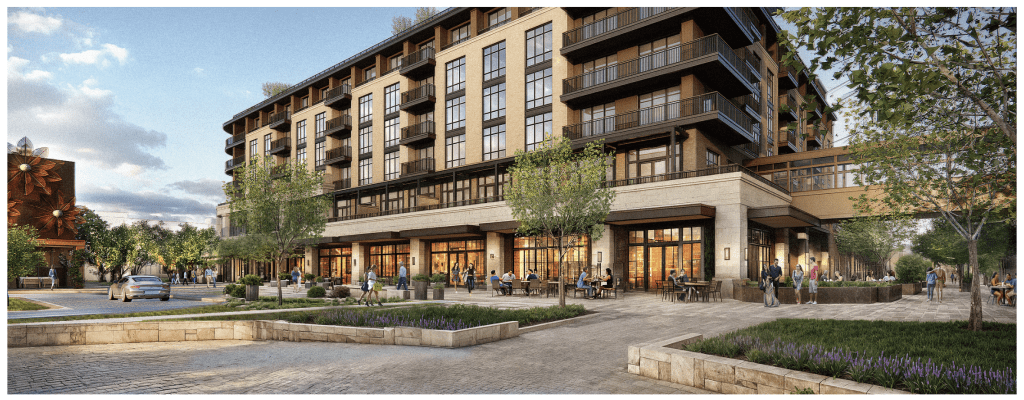
He finds downtown Napa with its walkable character ideal for condominiums and apartments, but multifamily housing still gets pushback—and he believes attitudes need to change. “That’s why some of these statewide rules are helpful,” he says. State legislation allowed the City of Napa to approve the First Street Napa Phase II Project in June 2025 without many of the previous restrictions, allowing a residential building with 78 condominiums and a hotel with up to 161 rooms. In another notable project, the Napa First United Methodist Church is dedicating a piece of its land for housing and is partnering with Burbank Housing and Napa Valley Community Housing to build 46 affordable workforce apartments.
What works in Napa and American Canyon, however, doesn’t necessarily work for smaller towns up the valley, and O’Connell finds that townhomes are a better fit. In addition, “ADUs are a really fascinating element in the housing picture,” he says, pointing out that construction is fast, and they’re a way for homeowners to add single units without changing the character of their neighborhoods. He reports that one in five housing units built annually in California is an ADU, and Napa County offers homeowners up to $105,000 through a forgivable loan program if they build an ADU and keep it affordable for five years. A dozen have been completed, and O’Connell considers it one of the best programs in the state.
Resistance reconsidered
Jenny Silva, executive director of Call Home Marin (formerly Marin Environmental Housing Collaborative), became aware of the need for more housing when she was running an ecommerce company that sold sheet music from all over the world and was unable to recruit experienced staff, because no one could afford to live in the Bay Area. She decided to become an advocate for increasing housing and started as a volunteer for YIMBY Action.
Silva says that even though the state has eased housing laws, it’s difficult to get a project in the pipeline in Marin. Fees, labor and land are expensive, and some communities are adamantly resistant to multifamily dwellings, often forcing developers to deal with lawsuits before they can begin. Mill Valley’s 1 Hamilton Drive, an affordable housing project with 45 units in a four-story building on 1.75 acres on the city’s east side, is one such case. “Mill Valley doesn’t have any affordable housing, and opponents said it was segregation,” she says, explaining that opposition through legal action is a particular problem, because so many people in affluent communities have the resources to fight new housing. In addition, “NIMBY is so entrenched, it’s much harder to change things,” she says.
Nevertheless, the Marin County Office of Education and the County of Marin are developing Oak Hill Apartments, a workforce-housing project on Sir Francis Drake Boulevard near the Larkspur Ferry terminal, with governance by the Marin County Public Financing Authority. It will be composed of two residential communities on 8 acres: one with 115 units of affordable rental housing and the other with 135 units of workforce rental housing to accommodate income-qualifying teachers, staff and county employees. “It’s the most significant development we have that will really have an impact on our housing supply,” says Silva. Its neighbor, the Drake’s Landing Homeowners Association, opposed it, as did the Coalition of Sensible Taxpayers, who believed it would be unwise for school districts to support housing while they were dealing with deficits. “It surprised me to see how strongly they came out against this,” Silva says. Oak Hill does have considerable support, however, including a $7.5 million state grant that state Sen. Mike McGuire acquired and a loan of up to $7.4 million at 3% interest from the Marin Community Foundation.

Silva reports that Marin has had one of the lowest rates of housing development in California for decades, and 5,000 households are in danger of losing their housing within the next five years, as Marin becomes even less affordable. She recalls meeting three women in their 70s at Call Home Marin’s table at the San Rafael farmers market. They were educated, articulate and well-dressed, and “You wouldn’t think they’d be vulnerable,” she says. Yet their rent was outpacing their income, and they were at risk of having to either leave Marin or go homeless. “They really felt betrayed by our community. More people are housing insecure than we realize,” she says.
Resisting change is human nature, but acceptance might well be the wiser path if we’re to create healthy, welcoming communities, say those advocating for YIMBYism. The state’s Regional Housing Needs Allocation requires every city and county to build a mandated amount of housing by 2032 or lose local control over project approvals. “It would be much better to be proactive in planning. Change is happening. Do you want change for positive good or negative good?” asks Lewis.
It’s an important question, and the way we shape our communities for the future depends on the answer.
SB 79 and SMART
California YIMBY and chapters throughout the state successfully advocated for the passage of state Senate Bill 79, which makes the construction of high-density housing within half a mile of major public transit stops easier.
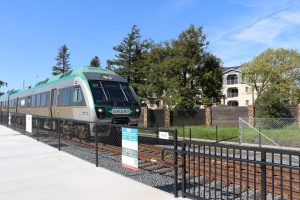
Gov. Gavin Newsom signed the legislation into law on Oct. 10, 2025, but it will have little impact on the North Bay counties, because they lack high-volume rapid transit. Adrian Covert, a leader of Santa Rosa YIMBY, would like to lobby for an exemption that would allow SB 79 to apply to proposed housing near SMART stations. He lives in downtown Santa Rosa and, for him, proximity to the train is one of the area’s benefits.—Judith M. Wilson