
Cheese fondue, the version most of us are familiar with, is believed to have started during the 18th century in Switzerland. It was purportedly a way to use aged cheeses and leftover breads to feed families who had limited access to fresh foods during the wintertime. Local villagers found that if they heated the cheese with wine, garlic, and herbs they could dip their stale bread which would soften when dipped into the flavorful cheese mixture. This way of cooking together over one pot and eating by a warm cozy fire became a Swiss winter tradition known as fondue. The word fondue comes from the French word, ‘fondre’, which means ‘to melt’ and has since then been used to reference many other types of fondue including chocolate.
The traditional cheeses for making cheese fondue are Swiss cheeses, mainly Emmental and Gruyère. Different regions in Switzerland, as well as France and alpine Italy, include other cheeses, including Vacherin, Appenzeller, and Sbrinz in Switzerland; Comté, Beaufort and Reblochon in France; and Fontina in Italy.
Cheese is by no means the only type of fondue. Fondue-like dishes without cheese exist in cultures around the world, such as Chinese hot pots and Japanese shabu-shabu, in which diners cook meat, eggs, seafood or vegetables in a communal pot of bubbling oil or steaming broth. Mexico’s queso fundido is served with tortilla chips rather than bread, while bagna cauda in Italy relies on pureed anchovies for texture and flavor and is typically accompanied by raw or blanched vegetables.
In France, Fondue bourguignonne is a classic variation featuring hot oil instead of cheese with chunks of meat in place of the bread. The meat, first skewered on a long fork, is immersed into the hot oil where it cooks, and is served with an assortment of dipping sauces such as Béarnaise, aioli, and horseradish sauce. Vegetables and seafood are also often served with hot oil fondue.
Chocolate fondue or dessert fondue is thought to be an American invention and had its birth in the mid-20th century. There are several who claim its ‘invention’, but anyone who has had it can vouch for its rightful place in the fondue firmament.
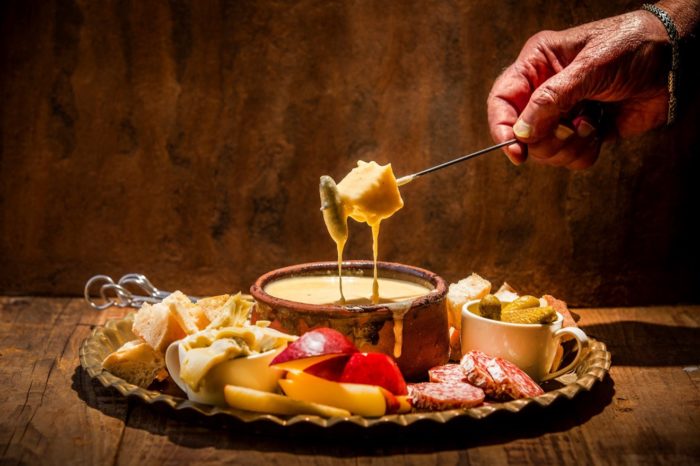
John Burgess Santa Rosa Press Democrat
CLASSIC SWISS CHEESE FONDUE
Serves 4 – 6
If you are of a certain age there was a time when all of us had at least one fondue set which was the classic wedding gift. Time to dig yours out if you still have it. A Dutch oven works fine too. This recipe uses two typical Swiss cheeses, Emmentaler and Gruyere, but you can experiment with your favorite melting types like cheddar, jack, Comte or fontina. The classic dippers are cubes of crusty bread, but really anything goes like boiled tiny potatoes, coins of kielbasa, roasted brussels sprouts, raw or blanched cauliflower or broccoli, cornichons and crisp fruits like apples and pears.
8 ounces Emmentaler cheese, shredded or cut into 1/4-inch dice
8 ounces Gruyere cheese, shredded or cut into 1/4-inch dice
1 tablespoon potato starch or arrowroot
2 cloves garlic, one cut in half and one minced
1-1/2 cups dry white wine, such as sauvignon blanc, plus more as needed
3 tablespoons kirsch
1/2 teaspoon paprika
Pinch freshly grated nutmeg
Freshly ground black pepperIn a medium bowl, toss the cheeses with the starch until the cheese is evenly coated.
Rub the halved garlic all around the inside of an enameled Dutch oven (or fondue pot). Add the wine and bring it to almost a boil over medium heat. You should see some bubbles breaking the surface. Gradually add the cheese to the pot, stirring constantly with a spatula or wooden spoon. Continue stirring until the cheese is thoroughly melted and the mixture is smooth.
Stir in 3 tablespoons kirsch, the minced garlic, paprika, nutmeg and freshly ground black pepper to taste. Continue stirring the mixture until it just starts to simmer and thickens. If you dip a piece of bread into the fondue, the cheese should coat it.
Reduce the heat to low and serve, encouraging guests to stir and scrape the bottom as they dip into the fondue. (Alternately, if you have a fondue set, place the fondue pot over its heat source.) As time goes on, the fondue will thicken, so you may need to fiddle with the heat, occasionally increasing it and adding more wine to maintain a fluid consistency.
High heat is the enemy of fondue, as it can cause the cheese to break and the mixture to separate. Including starch is one insurance policy against that sad result. To further guard against breaking, make the fondue over nothing higher than medium heat. Gradually add the cheese a little at a time, stirring constantly with a spatula or wooden spoon, not a whisk which can turn the texture stringy. Once the fondue just starts to bubble and you feel it thicken, it’s ready for dipping.
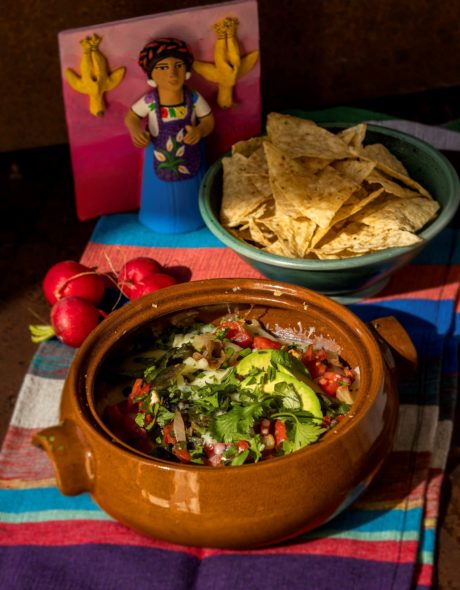
John Burgess Santa Rosa Press Democrat
FUNDIDO CON QUESO
(Mexican Melted Cheese with Tomatillo Salsa)
Serves 4 or more
Literally a Mexican “fondue”. It can be made in a single large ovenproof dish or cast-iron skillet and served family style. Here I’ve used an 8-inch (4 cup) Mexican terra cotta dish. At its simplest its usually cheese melted and topped with some kind of salsa. I’ve done a little more than that here but feel free to experiment like adding some cooked chorizo.
1 large poblano pepper
1 small red onion, peeled and quartered
1 or 2 serrano chiles, stemmed and seeded
2 medium size ripe roma tomatoes, halved and seeded
Salt and freshly ground pepper to taste
1-pound Asadero, Oaxaca, Jack or other melting cheese, coarsely grated
1/3 cup roughly chopped cilantro leaves
Sliced avocado for garnish
Corn tortillas or chips
Char the pepper over a gas flame or under a hot broiler and then scrape off the blackened skin (do not wash). Remove and discard the seeds and stems and cut into medium dice and set aside. Grill, broil or dry pan roast the onion, chile and tomatoes until lightly colored. Chop all, add to the pepper and season to taste with salt and pepper.
Arrange half the cheese in the bottom of a 4-cup terra cotta dish and scatter half the vegetables over the top. Sprinkle half the cilantro over this. Sprinkle remaining cheese and vegetables overall. This can all be done an hour or two ahead until ready to serve.
To serve: Place the filled dish in a hot (400 degree) oven for 8 minutes or until cheese is nicely melted and just beginning to color. Note: You can also melt the cheese easily in a microwave oven. Heat at full power for 2- or 3-minutes depending on wattage of oven. Top with the remaining cilantro and sliced avocado. Serve immediately with crisp tortilla chips.
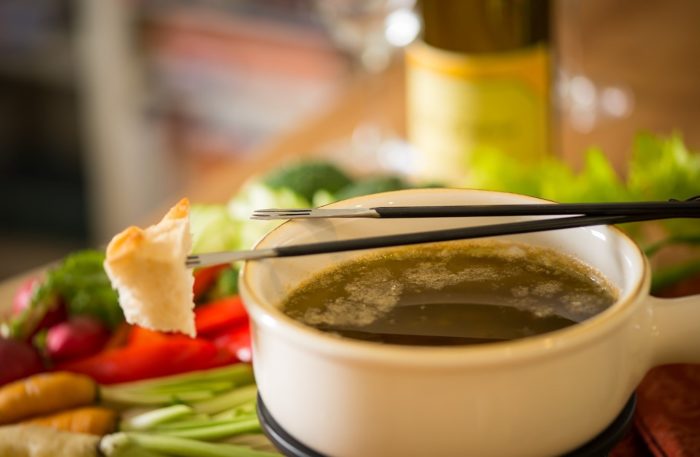
John Ash
BAGNA CAUDA
One of my favorite appetizers to share with friends is a simple, ancient concoction from Italy called Bagna Cauda. It’s a warm olive oil, garlic and anchovy mix that you dip cooked or raw vegetables, crusty bread or almost anything else into. It couldn’t be simpler to make, and you can adjust ingredients to suit your taste.
3/4 cup extra virgin olive oil
3 tablespoons butter
2 teaspoons garlic, chopped very fine
8 – 10 drained anchovy fillets, chopped fine
Salt and freshly ground pepper
Add all ingredients to a heavy bottomed saucepan. Heat gently stirring with a wooden spoon to mash and dissolve the anchovies. Add salt and pepper to your taste and serve warm. This is a great opportunity to use one of those little candle warmed serving dishes. You’ll be able to enjoy the Bagna Cauda through the evening
SHABU-SHABU
Serves 6
This is a recipe adapted from Nancy Singleton Hachisu in her book Japanese Farm Food. You’ll need a portable tabletop gas burner to make this at your table. Shabu-shabu translates to swish-swish, the sound the meat makes as you cook it.
18 small shiitake mushrooms, woody stems removed and discarded
3 cups of so coarsely shredded napa cabbage
4 thin spring onions or scallions cut into 2-inch lengths
2 12-ounce blocks of Japanese tofu cut into 8 pieces each
1-1/2 pounds well marbled sirloin, sliced crosswise into thin 1/4-inch sheets*
3 6-inch pieces of dried konbu seaweed
Ponzu sauce for serving (recipe follows)
Steamed Japanese rice to accompany
Arrange the vegetables and tofu attractively on a large plate. Lay the meat slices on another platter. Fill a flameproof cookpot or casserole one-third full with water and add the konbu. Place the pot on the burner and bring the two platters to the table.
Bring water to a boil over high heat on the burner. Reduce heat to a simmer and add some of each vegetable and several pieces of tofu to the simmering liquid. Once the vegetables are just cooked, lower the flame to a gentle simmer. Ladle some of the broth with some of the vegetables and tofu into small bowls set in front of each person.
Each person picks up a piece of sirloin with their chopsticks and swishes it in the simmering broth until it is no longer raw but still pink. Add ponzu to your taste and eat meat, vegetables and tofu all together. Often served with a small bowl of Japanese rice.
*If you can, take a platter to your butcher to lay meat slices in an overlapping pattern. It will make serving much easier.
Ponzu sauce
Makes 1 cup
1/2 cup Japanese soy sauce
1/2 cup bitter orange juice, yuzu juice or 1/4 cup each lemon and tangerine juices
Chopped chives for garnish
Mix soy sauce and bitter orange juice in a bowl. Sprinkle in some chopped chives just before using. Use within a day or so.
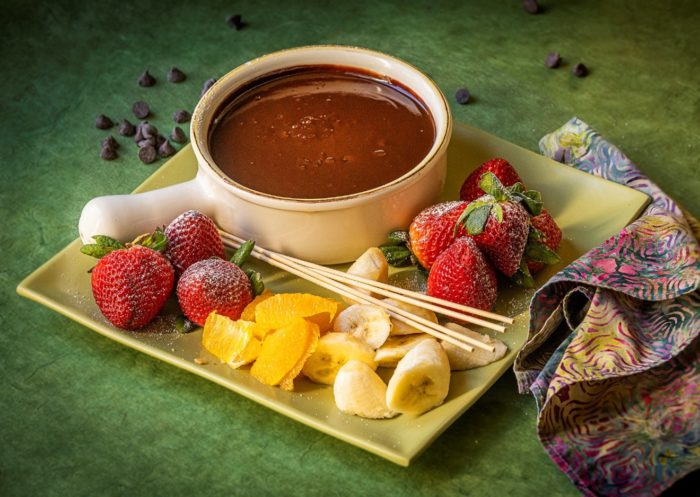
John Burgess Santa Rosa Press Democrat
CHOCOLATE FONDUE
Serves 6 or more
Nearly anything can be dipped into this luscious fondue. Popular dippers include pretzels, marshmallows, vanilla wafers, Oreos, strawberries, bananas, apples, citrus segments, dried fruits, rice crispy treats, even cubes of cake. Endless possibilities.
10 ounces bittersweet or semisweet chocolate, cut into small pieces
1/2 to 3/4 cup half and half
1/2 teaspoon vanilla extract or 2 tablespoons dark rum
Combine the chocolate and 1/2 cup half and half and melt gently in a barely simmering water bath. Alternately microwave on medium (50%) power for about 2 minutes. Stir until smooth. Add more half and half if mixture seems too thick or looks curdled. Remove from heat and stir in vanilla. Use immediately or keep warm in a barely simmering water bath.
John Ash © 2022